If you are using Odoo for your business accounts, you have probably asked yourself about the difference between an expense and a vendor bill in Odoo 19 accounting. Many business owners, accountants, and even employees get confused when deciding whether to record something as an expense or as a vendor bill.
The difference between an expense and a vendor bill in Odoo 19 accounting is not just about which button you click. It directly affects how Odoo 19 records expenses in accounting, how payments are processed, and how your financial reports look at the end of the month.
In this blog, we will clearly explain the difference between an expense and a vendor bill in Odoo 19 accounting, break down the Odoo 19 expense vs vendor bill difference, and help you understand when to use an expense or a vendor bill in Odoo 19. By the end, you will confidently know how to record company expenses, Odoo 19 vendor bill or expenses without confusion.
Odoo 19 Accounting Expense vs Supplier Bill – Why Two Different Options?
When we talk about Odoo 19 accounting expense vs supplier bill, we are actually talking about two different situations. Both are related to company costs, but the flow is different.
An expense in Odoo is usually connected to an employee. It is used when an employee spends their own money for company work. For example, travel, fuel, food during a client meeting, or small office items. The employee pays first, and then the company reimburses.
A vendor bill is used when a supplier sends an invoice to your company. In this case, the company has not paid yet. The bill is recorded, and the company will pay the supplier later according to payment terms.
So, the difference between the expense app and vendor bills Odoo starts from one simple question: who paid first? If the employee paid first, it is an expense. If the supplier is waiting for payment, it is a vendor bill.
Vendor Bill vs Employee Expense Odoo – Who Paid and Who Is Waiting?
Let’s understand the vendor bill vs employee expense Odoo more virtually. Imagine your employee goes for a business trip. He pays for fuel and lunch using his own cash. Later, he submits a claim in Odoo. This is clearly an expense. The company now owes money to the employee.
Now, imagine your office receives an internet bill from your service provider. The company has to pay this bill within 15 days. This is a vendor bill. The company owes money to the supplier.
This is the core difference between an expense and a vendor bill in Odoo 19 accounting. In one case, the employee needs reimbursement. In the other case, the supplier needs payment.
When people don’t understand this, they start using vendor bills for employee claims or expenses for supplier invoices. That creates confusion in reports and payables.
Difference Between an Expense and a Vendor Bill in Odoo 19 Accounting
Understanding the difference between an expense and a vendor bill in Odoo 19 accounting is very important if you want clean reports and correct payables. Both are related to company costs, but the flow, purpose, and accounting impact are different.
Basis of Comparison | Expense (Employee Expense) | Vendor Bill (Supplier Bill) |
Who Pays First | Employee pays from personal money | The supplier provides goods/services, but the company has not paid yet |
Main Purpose | Employee reimbursement | Recording supplier invoice |
Module Used | Expense App | Accounting App (Vendor Bills) |
Payable Created | Payable to Employee | Accounts Payable (Supplier) |
Payment Flow | Usually reimbursed after approval | Paid based on payment terms and due date |
Approval Process | Goes through the Odoo 19 expenses approval workflow | Usually validated by an accountant (no employee-style approval) |
Reporting Impact | Affects employee expense reports | Affects vendor aging and supplier balances |
Example | Fuel, travel, meals paid by employee | Rent invoice, utility bill, and inventory purchase |
Accounting Entry | Expense account debit, Employee payable credit | Expense/Asset debit, Accounts Payable credit |
Used When | Employee already paid | The company needs to pay the supplier |
So, in simple words, if the employee has already spent money on company work, use an expense. If the company has received a bill and needs to pay a supplier, use a vendor bill. Keeping this difference clear in Odoo 19 accounting will help you avoid confusion in reports and payment tracking.
Odoo Expense Creates Direct Payment vs Vendor Bill Payable: What Happens in Accounting?
Now, let’s talk about the accounting side, because this is where Odoo expense creates direct payment, vs a vendor bill payable becomes important.
When you approve an employee expense in Odoo, the system records the expense and creates a payable to the employee. Once you register the payment, it clears the payable. In many cases, Odoo expense creates a direct payment vs va endor bill payable because it is designed for quick reimbursement.
On the other hand, when you create a vendor bill, Odoo records it under Accounts Payable. That amount stays there until you make the payment. It shows in your vendor aging report and affects your outstanding liabilities.
So, in Odoo 19, vendor bill journal entry vs expense, the structure is slightly different. A vendor bill clearly creates a liability in Accounts Payable. An expense creates a payable to the employee, which is often processed quickly. This difference might look small, but during audits or financial reviews, it matters a lot.
Odoo 19 Vendor Bill Journal Entry vs Expense
Let’s go a little deeper into Odoo 19 vendor bill journal entry vs expense. When you post a vendor bill, Odoo debits the expense or asset account and credits Accounts Payable. That means your company officially owes money to the supplier.
When you post an employee expense, Odoo debits the expense account and credits a payable account linked to the employee. After reimbursement, the payable is cleared.
So technically, both create payables, but the nature of the payable is different. Vendor bills affect supplier balances. Expenses affect employee reimbursements.
This is an important part of the Odoo 19 expense vs vendor bill difference. If you mix them, your supplier statements and employee balances will not match reality.
Difference Between Expense App and Vendor Bills Odoo – Functional Side
Now, let’s talk about the difference between the expense app and vendor bills Odoo from a functional point of view.
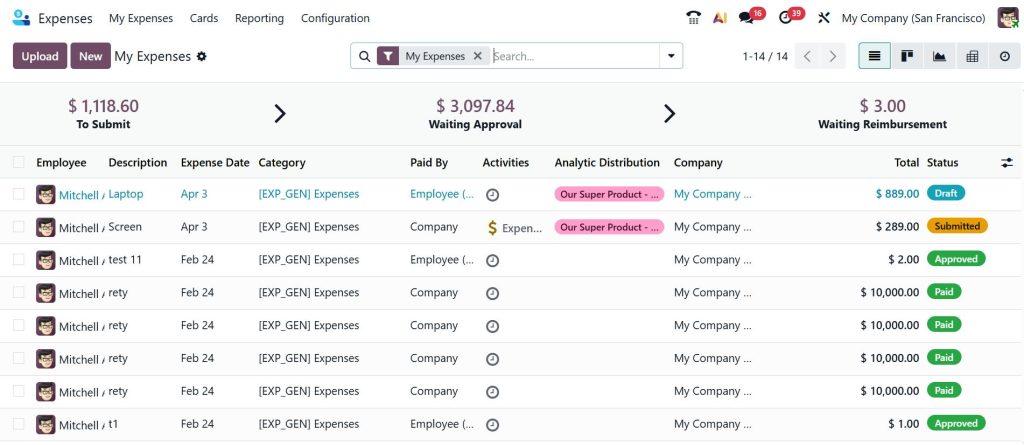
The Expense App is more HR-focused. It is designed for employees to submit claims. It includes expense categories, attachments of receipts, and approval steps. It is built around the idea of reimbursement.
Vendor Bills are part of the Accounting module. They are designed to manage supplier invoices, due dates, taxes, and payment terms. They are built around liability management.
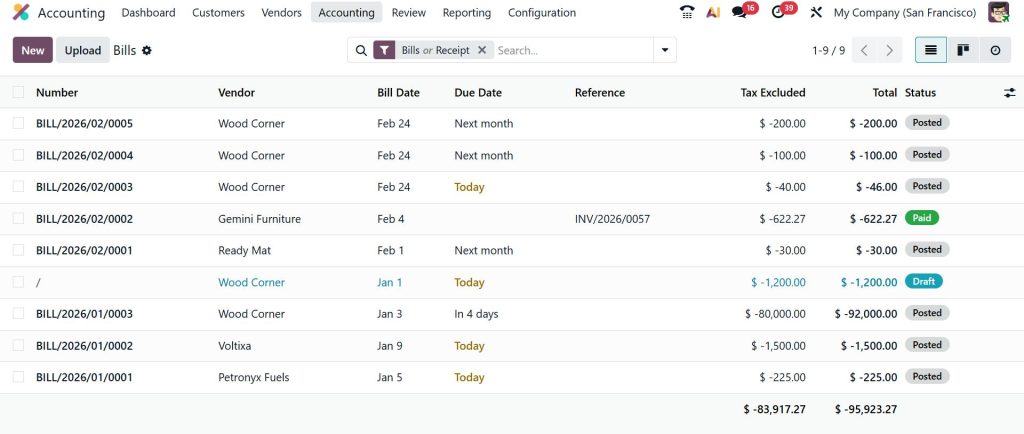
This is why the Odoo 19 accounting expense vs supplier bill is not just about posting entries. It is about using the correct module for the correct purpose. If you try to record all costs using only vendor bills or only expenses, you will miss the proper workflow and tracking features.
Odoo 19 Expenses Approval Workflow vs Vendor Bills – Control and Process
Another major part of the Odoo 19 expenses approval workflow vs vendor bills is how approvals work. In the Expense App, an employee submits an expense. It goes to the manager for approval. Then, accounting reviews and processes the payment. This creates internal control. You can decide who approves what, and up to what limit.
Vendor bills usually do not go through the same employee-style workflow unless you configure custom approval rules. Most of the time, the accountant records and validates the bill directly.
So, if you want proper control over employee spending, you should not record it as a vendor bill. The Odoo 19 expenses approval workflow vs vendor bills clearly shows that each tool has a different purpose. Understanding this helps you decide when to use an expense or a vendor bill in Odoo 19 without second-guessing.
When to Use Expense or Vendor Bill Odoo 19 – Simple Rule You Can Follow
You don’t need to overthink when to use an expense or a vendor bill in Odoo 19. Just remember this simple rule.
- If an employee used personal money for company work, use Expense.
- If a supplier sent you an invoice and your company will pay them, use the Vendor Bill.
For example, if your employee buys office stationery from a local shop and pays cash, that is an expense. But if you have a monthly contract with a supplier who sends you an invoice, that is a vendor bill. This one rule will solve most of your confusion about record company expenses, Odoo 19 vendor bill, or expense.
How Odoo 19 Records Expenses in Accounting – Why It Matters for Reports
Many people don’t think about how Odoo 19 records expenses in accounting until something goes wrong in reports.
If you record supplier invoices as expenses in the Expense App, your vendor aging report will not show the correct outstanding amounts. You will not see what you actually owe to suppliers.
If you record employee claims as vendor bills, your supplier list will start showing employees as vendors. That makes your reports messy and hard to understand.
So, how Odoo 19 records expenses in accounting directly affects your Profit and Loss statement, Accounts Payable report, and even cash flow planning. This is why the difference between an expense and a vendor bill in Odoo 19 accounting is not just a technical topic. It is connected to the accuracy of your financial data.
Odoo 19 Expense vs Vendor Bill Difference – Why Getting It Right Saves You Trouble
The Odoo 19 expense vs vendor bill difference might look small when you are entering a single transaction. But imagine hundreds of entries every month. Small mistakes repeated many times can create big confusion.
If your team understands vendor bill vs employee expense Odoo clearly, your accounting will stay clean. Your approvals will work properly. Your reports will make sense. And when auditors ask questions, you will not struggle to explain why employees are listed as vendors or why supplier balances don’t match.
So, take this seriously. Train your team. Set clear internal rules. Decide how to record company expenses in Odoo 19 vendor bill, or expense from day one.
Still Confused? Here’s What You Should Do Next
By now, you clearly understand the difference between an expense and a vendor bill in Odoo 19 accounting. It all comes down to one simple thing: who paid first and who needs to be paid. But in real business life, things don’t always look this simple. Sometimes entries are already mixed, reports are not matching, and your team is not sure when to use expense or vendor bill in Odoo 19.
If you ignore this confusion, it slowly creates bigger issues. Your vendor balances may not match. Employee reimbursements may get delayed. Your Profit and Loss report may not reflect the correct picture. And during audits, small mistakes can raise unnecessary questions.
That’s why understanding the Odoo 19 expense vs vendor bill difference is not enough. You also need to implement it correctly in your system. Your Expense app, vendor bills, journal entries, and approval workflow should all be properly configured so that how Odoo 19 records expenses in accounting stays accurate from day one. If you are not sure whether you are correctly using vendor bill vs employee expense Odoo in your company, this is the right time to review your setup.
At Netilligence, we help businesses fix these exact issues in Odoo 19. Whether you need help deciding how to record company expenses, an Odoo 19 vendor bill, or an expense, or you want to clean up your current accounting structure, our team can guide you step by step.
Don’t wait for reporting problems to appear. Contact Netilligence today and make sure your Odoo 19 accounting expense vs supplier bill process is clear, correct, and easy to manage.