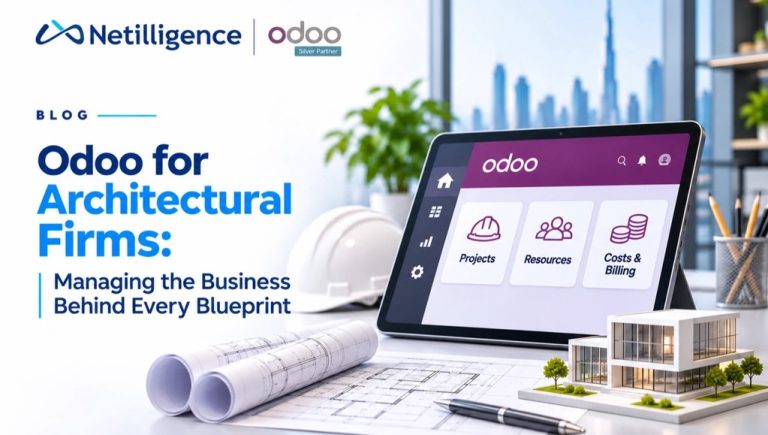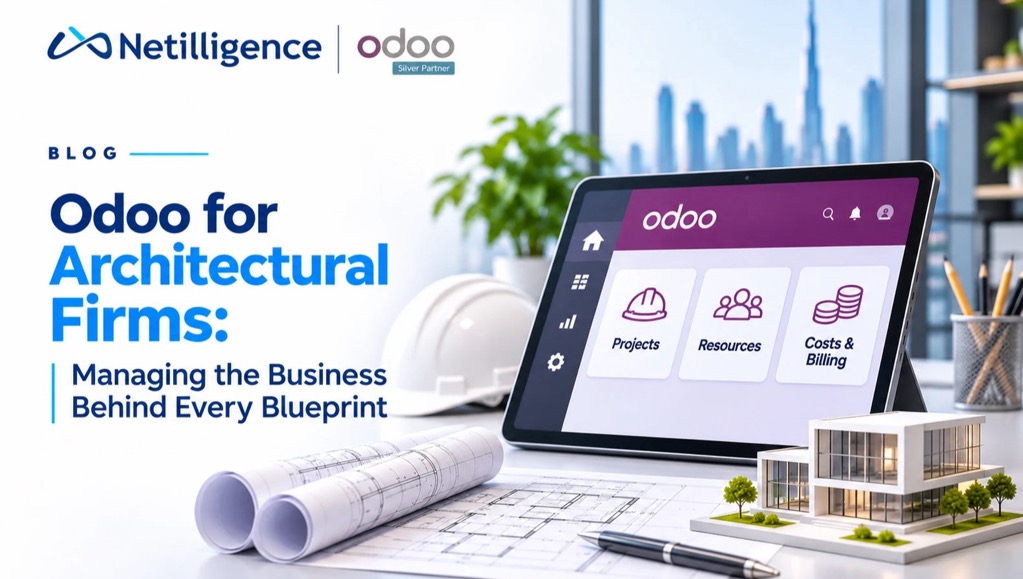
What Happens Behind the Blueprint Determines the Success of the Business.
A brilliant design may win a client, but managing deadlines, coordinating teams, tracking project costs and securing timely payments is what keeps an architectural firm running. When these responsibilities are scattered across disconnected systems, even well-planned projects can become difficult to manage.
Odoo brings essential business functions together, helping architectural firms connect project execution, client relationships and financial management through an integrated business management platform.
Odoo for Architectural Firms: Bringing Business Operations Under One Roof
Architectural practices manage multiple responsibilities simultaneously, from pursuing new commissions to monitoring ongoing projects and managing financial commitments. When information is spread across spreadsheets and separate applications, maintaining a clear picture of business performance becomes difficult.
Odoo ERP for architectural firms connects relevant business functions within one platform. Depending on the applications implemented, firms can manage projects, customer relationships, sales, accounting and employee timesheets through interconnected workflows. This reduces unnecessary duplication and helps management maintain better operational visibility.
Odoo Project Management: Coordinating Multiple Architectural Projects
Managing several projects requires balancing deadlines, team responsibilities and competing priorities. Delays in one phase can affect subsequent tasks, resource availability and overall delivery schedules.
Odoo Project Management allows firms to organise projects into tasks, assign responsibilities, establish deadlines and monitor progress. Teams can track activities across multiple commissions, while managers can identify overdue tasks and potential scheduling conflicts.
For example, a firm handling residential and commercial projects can organise deliverables, allocate team members and review progress within a central system. This supports coordination without replacing specialist architectural planning tools.
Odoo CRM: Managing Client Relationships and New Project Opportunities
Winning architectural commissions often begins with enquiries, referrals and networking. Without a structured follow-up process, promising opportunities can be overlooked or prospective clients may receive inconsistent communication.
Odoo CRM helps firms record leads, organise opportunities, schedule follow-ups and track prospects through the sales pipeline. Teams can maintain client information and identify opportunities that require attention.
When a prospective client enquires about a commercial project, the firm can track the opportunity and coordinate the next steps. Integration with Odoo Sales can also support a more organised transition from the initial enquiry to a commercial proposal.
Odoo Accounting: Keeping Architectural Project Finances on Track
Revenue alone does not determine whether an architectural firm is profitable. Employee costs, consultant fees, software subscriptions and other expenses all influence financial performance.
Odoo Accounting supports financial record-keeping, customer invoicing, vendor bills, payment tracking and financial reporting. With suitable analytical accounting configuration, firms can associate relevant costs and revenue with individual projects.
This helps management compare project expenditure against expectations and identify potential financial concerns. Meaningful project-level insights depend on accurate records and appropriate configuration.
Odoo Timesheets: Understanding Project Hours and Resource Utilisation
Architectural work relies heavily on professional time and expertise. If working hours are not recorded consistently, firms may struggle to compare actual effort with initial estimates.
Odoo Timesheets allows employees to log working hours against projects and tasks. Managers can review recorded time, understand resource utilisation and compare actual hours with planned allocations.
For instance, if a consultancy repeatedly spends more hours than estimated on similar projects, historical timesheet records can help improve future pricing, staffing and project planning. Recorded hours can also support time-based invoicing when the relevant workflow is configured.
Odoo Sales: Managing Quotations, Service Agreements and Invoicing
Architectural firms need a consistent way to prepare commercial proposals and translate accepted work into clear billing arrangements. Manual processes can create discrepancies between quoted services and subsequent invoices.
Odoo Sales supports quotation creation, sales orders and related commercial workflows. Firms can define their services, prepare proposals and manage the transition from an accepted quotation to project delivery.
Depending on the contract and configuration, billing can follow fixed-price, milestone-based or timesheet-based arrangements. This helps align commercial commitments with project delivery and invoicing processes.
Odoo Expense Management: Tracking the Costs Behind Every Project
Project expenditure extends beyond employee working hours. Site visits, travel, professional services and other expenses can gradually affect a project’s financial outcome.
Odoo Expense Management enables employees to submit expense records and supporting information for review and approval. Where expenses are assigned to the appropriate project or analytical account, managers can examine their contribution to project costs.
This creates a structured approach to capturing expenditure and identifying costs that might otherwise remain disconnected from project records.
Odoo Reporting: Turning Business Data into Better Decisions
Operational information becomes more valuable when managers can use it to evaluate performance. Reviewing project progress, staffing levels and financial results separately can make it difficult to understand the bigger picture.
Odoo reporting tools can help firms examine relevant information, including recorded hours, project progress, costs and revenue, depending on the applications and configuration used.
With accurate, connected records, firm leaders can identify projects consuming more resources than expected, assess workload distribution and make informed decisions about pricing, staffing and future opportunities.
Odoo ERP Integration: Connecting Business Functions Across an Architecture Firm
Architectural practices may already rely on accounting tools, document storage platforms and specialist CAD or BIM applications. Implementing an ERP system does not necessarily mean replacing every existing tool.
Odoo connects its business applications, while integration with external systems may be possible through existing connectors, APIs or customised development. The appropriate approach depends on the firm’s technology environment, data requirements and workflows.
The objective is to create a practical business-management environment where commercial, financial and project information work together without compromising specialist design processes.
Architectural firms need reliable business processes to support their creative expertise. From managing prospective clients and coordinating projects to tracking working hours, monitoring expenditure and evaluating profitability, every function contributes to sustainable operations.
Odoo ERP software provides a flexible foundation for connecting these responsibilities. By selecting the right applications and configuring them around established business processes, architectural firms can improve operational visibility, strengthen financial oversight and build a more organised foundation for growth.