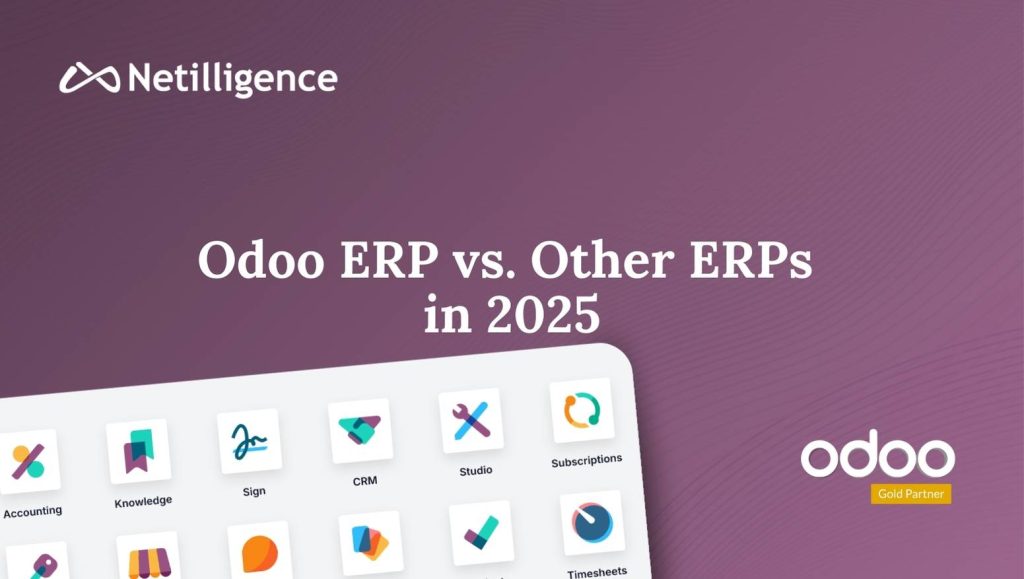
Odoo vs. Competitors in 2025: Every year, businesses face a critical question beyond software: which ERP system truly supports long-term growth, adaptability, and control?
In 2025, that question is louder than ever. The conversation is shifting as companies reexamine outdated systems and rework costly contracts. Industry staples like SAP, Oracle, Microsoft Dynamics, NetSuite, ERPNext, and Acumatica still hold significant ground. But Odoo, the modular, open-source ERP, is challenging the status quo – with surprising force.
It’s not just about cost. It’s about flexibility, user experience, and choosing a system that grows with your business instead of slowing it down.
This blog is your detailed guide to Odoo vs Competitors in 2025, a side-by-side look at performance, pricing, usability, innovation, and real-life use cases. Whether you’re exploring Odoo vs SAP, Oracle, NetSuite, Dynamics, ERPNext, or Acumatica, this comparison will allow you to make an informed, confident ERP choice.
You’re in the right place if you’re tired of buzzwords and looking for real answers.
Let’s find out which ERP delivers in 2025.
Quick Snapshot: Odoo vs the Giants
ERP | Flexibility | Cost | Customization | Ease of Use | Best For |
Odoo | ★★★★★ | ★★★★★ | ★★★★★ | ★★★★★ | SMEs & Agile Enterprises |
SAP | ★★☆☆☆ | ★☆☆☆☆ | ★★☆☆☆ | ★★☆☆☆ | Multinationals |
Oracle | ★★☆☆☆ | ★★☆☆☆ | ★★☆☆☆ | ★★☆☆☆ | Large Corporates |
NetSuite | ★★★☆☆ | ★★☆☆☆ | ★★☆☆☆ | ★★★☆☆ | Scaling Businesses |
Microsoft Dynamics | ★★★☆☆ | ★★☆☆☆ | ★★★☆☆ | ★★★☆☆ | MS Ecosystem Users |
ERPNext | ★★★★☆ | ★★★★★ | ★★★★☆ | ★★★☆☆ | Startups |
Acumatica | ★★★☆☆ | ★★☆☆☆ | ★★★☆☆ | ★★★★☆ | Cloud-Centric SMEs |
Odoo vs SAP in 2025: Flexibility Meets Enterprise Power
Flexibility Meets Enterprise Power
SAP S/4HANA:
- Enterprise-grade, but rigid and expensive
- High implementation & customization costs
- Requires specialized consultants
- Suitable for global conglomerates with uniform processes
Odoo:
- Modular: Start with what you need, expand later
- Agile deployment: Weeks vs SAP’s months
- Lower cost of ownership
- Open-source + community innovation
🟢 Best Choice for: Mid-sized businesses looking for speed, affordability, and scale.
Odoo vs Oracle in 2025: Usability Over Complexity
Oracle ERP Cloud:
- Deep enterprise finance capabilities
- Heavy IT dependency
- Long learning curve
- Complex customizations
Odoo:
- Simple, intuitive UI
- Designed for fast adoption
- Supports customization without vendor lock-in
- Ideal for businesses wanting more control with less technical debt
🟢 Best Choice for: Organizations that prioritize usability and flexibility over legacy complexity.
Odoo vs NetSuite in 2025: Modularity vs Monolith
NetSuite (by Oracle):
- Cloud-native ERP
- Full-suite purchase required
- Predictable, but rigid
- Licensing can be costly
Odoo:
- Pick only the apps you need (CRM, HR, Sales, etc.)
- Transparent, pay-as-you-grow pricing
- Extensive integration & community add-ons
- Easier to mold to your business processes
🟢 Best Choice for: SMEs looking for modular growth without vendor lock-in.
Odoo vs Microsoft Dynamics in 2025: Community-Driven vs Corporate Integration
Microsoft Dynamics 365:
- Strong integration with Office 365 & Teams
- Powerful analytics (Power BI)
- Enterprise licenses add up quickly
- Complex implementation cycles
Odoo:
- Vendor-neutral integration options
- Lower infrastructure cost
- Faster time to value
- Open-source community fuels faster innovation
🟢 Best Choice for: Businesses that want open flexibility instead of being tied to a tech stack.
Odoo vs ERPNext in 2025: The Open-Source Duel
ERPNext:
- Lightweight and beginner-friendly
- Best for small teams and micro businesses
- Fewer enterprise-grade features
- Slower update cycle
Odoo:
- Deeper functionality (MRP, Field Service, Marketing Automation, etc.)
- More professional support available
- Extensive app marketplace
- Strong partner network
🟢 Best Choice for: Startups scaling into mid-sized operations with more complex needs.
Odoo vs Acumatica in 2025: Functionality Without the Price Tag
Acumatica:
- Cloud-first and mobile-ready
- High flexibility, strong APIs
- Resource-based pricing can surprise scaling companies
- Good user experience, but fewer low-code options
Odoo:
- Transparent licensing (no per-user cost in Community version)
- Flexible deployment: Cloud or On-premise
- Rich development community
- Easy to prototype and customize
🟢 Best Choice for: Businesses that want feature-rich ERP with predictable, scalable costs.
Odoo vs Competitors in 2025: The Bigger Picture
Now that we’ve broken down Odoo vs SAP, Odoo vs Oracle, Odoo vs NetSuite, Odoo vs Microsoft Dynamics, Odoo vs ERPNext, and Odoo vs Acumatica, let’s zoom out and ask the fundamental question: why is Odoo vs Competitors in 2025 such a crucial discussion?
The reason is simple: Odoo represents a shift in ERP philosophy. Where traditional systems demand heavy investments, rigid contracts, and long rollouts, Odoo empowers businesses with speed, customization, and scalability.
Its open-source model means developers worldwide are constantly improving it. Its modularity allows you to pick what works today and expand as you grow. And its global partner network means support is always accessible.
The Odoo vs Competitors in 2025 debate isn’t just technical; it’s strategic. Choosing Odoo over legacy systems could be the defining decision that accelerates your business in the new digital economy.
10 Reasons Why Businesses Are Choosing Odoo in 2025
- Lower Total Cost of Ownership
- No hidden fees or vendor bloat
- Free Community version or affordable Enterprise edition
- Faster Implementation
- Go live in weeks, not months
- Customization Without Limits
- Adapt to your processes, not the other way around
- Modular Architecture
- Scale functionally: Start with Sales, add HR, then Projects
- Active Community & Marketplace
- 40,000+ apps & third-party extensions
- Modern User Interface
- Easy onboarding, less training needed
- Strong Reporting & Dashboards
- Real-time analytics for better decision-making
- Cloud + On-Premise Options
- Choose your deployment strategy
- Global Partner Ecosystem
- Thousands of partners offering implementation, support, and training
- Open-Source Advantage
- Full transparency, long-term sustainability, no vendor lock-in
Odoo in Real-World Use Cases
Retail
- POS, Inventory, eCommerce integration
- Real-time stock sync and customer insights
Manufacturing
- MRP, Quality, Maintenance, and Work Orders
- Smooth supply chain workflows
Healthcare
- Patient records, Scheduling, Invoicing
- Integrated clinical + operational workflows
Services
- Project Management, Timesheets, Invoicing
- Automated task tracking and profitability reports
Logistics & Transport
- Shipment tracking, Warehouse automation
- Fleet management integration
Is Odoo the Best ERP in 2025?
Based on everything we’ve uncovered in this in-depth analysis of Odoo vs Competitors in 2025, the answer is a resounding “yes” for most small and mid-sized businesses and even for many larger enterprises that value agility.
Whether you compare Odoo to SAP, Oracle, NetSuite, Microsoft Dynamics, ERPNext, or Acumatica, Odoo consistently delivers a balanced combination of features, affordability, and scalability.
In an era where digital agility determines market leadership, selecting the right ERP is no longer a matter of preference; it’s a strategic necessity. For many businesses, Odoo is that smart, scalable, and future-ready choice.