Why Odoo ERP Migration is Becoming Essential
Odoo ERP migration is no longer just a technical upgrade, it has become a strategic move for businesses aiming to stay competitive in a rapidly evolving digital world. Today, companies are actively exploring why to choose Odoo ERP, and the answer lies in its flexibility, scalability, and cost-effectiveness.
If you’ve been wondering about the reasons to migrate to Odoo, you’re not alone. Organizations across industries are making the switch to Odoo ERP from legacy systems to facilitate operations, reduce costs, and improve overall efficiency. The debate of Odoo ERP vs traditional ERP is becoming clearer as more businesses experience the limitations of outdated systems.
One of the key drivers behind this shift is the wide range of Odoo ERP migration benefits, including real-time data access, seamless integration, and improved productivity. Additionally, the cost of Odoo ERP migration is significantly lower compared to traditional ERP systems, making it an attractive option for both SMEs and large enterprises.
Many companies are inspired by Odoo migration success stories, where businesses have transformed their operations and achieved remarkable growth. These success stories highlight exactly why businesses choose Odoo and how it supports long-term scalability.
From better customization options to simplified workflows, there are countless Odoo ERP implementation reasons that make it a preferred choice. In this blog, we will explore in detail why Odoo ERP migration is becoming the go-to solution for modern businesses.
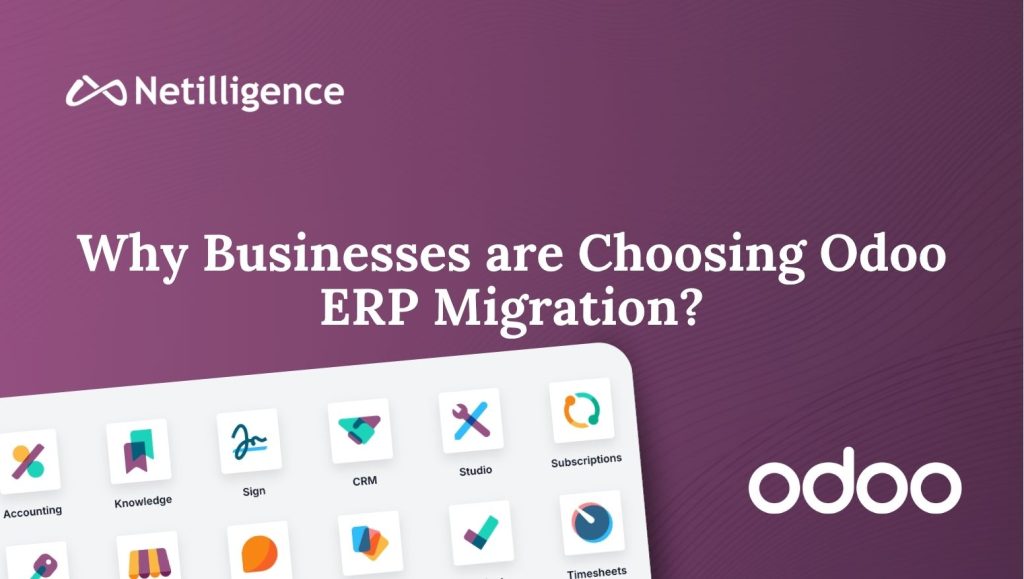
Why Businesses are Choosing Odoo ERP Migration
What is Odoo ERP Migration?
Before diving deeper, it’s important to understand what Odoo ERP migration actually means.
Odoo ERP migration refers to the process of moving your existing business system, whether it’s a legacy ERP, standalone software, or manual processes, to the Odoo platform. This includes transferring data, workflows, modules, and configurations into a unified system.
Unlike traditional ERP migrations that are often complex and costly, Odoo provides a smoother transition with minimal disruption to business operations.
Key Reasons to Migrate to Odoo ERP
1. All-in-One Business Solution
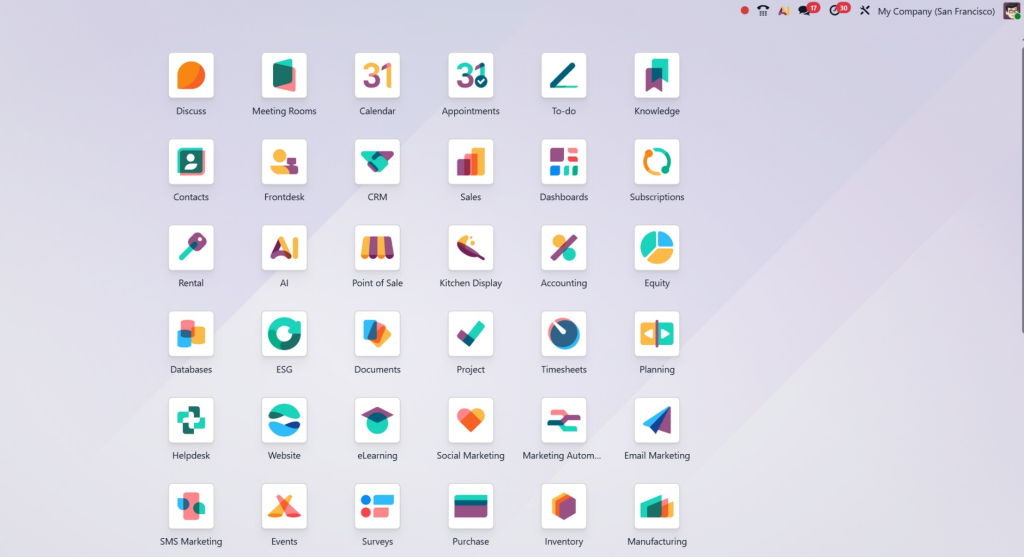
One of the biggest reasons to migrate to Odoo is its all-in-one nature. Odoo integrates multiple business functions such as:
- Accounting
- Sales
- Inventory
- HR
- CRM
- Manufacturing
Instead of using separate tools, businesses can manage everything from a single platform.
2. Cost-Effective Compared to Traditional ERP
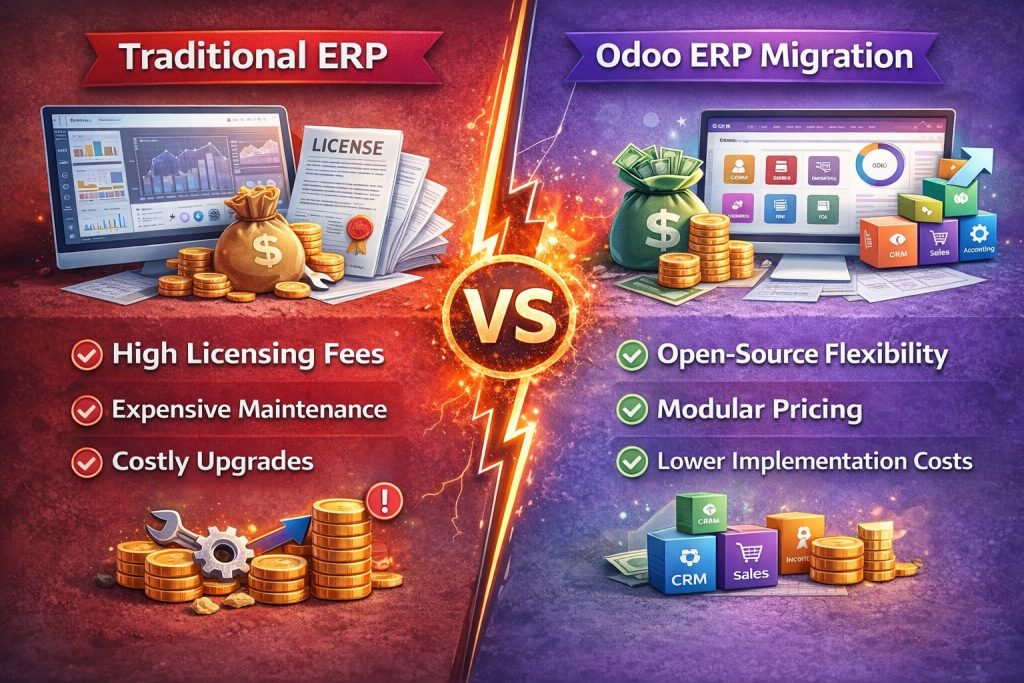
When comparing Odoo ERP vs traditional ERP, cost becomes a major factor.
Traditional ERP systems often require:
- High licensing fees
- Expensive maintenance
- Costly upgrades
On the other hand, the cost of Odoo ERP migration is significantly lower due to:
- Open-source flexibility
- Modular pricing
- Lower implementation costs
This makes Odoo especially appealing for growing businesses.
3. High Customization and Flexibility
Every business is unique, and Odoo understands that.
Unlike rigid legacy systems, Odoo allows:
- Custom module development
- Workflow customization
- Industry-specific solutions
This flexibility is a major reason why businesses choose Odoo over traditional ERP systems.
4. User-Friendly Interface
Another strong point in favor of Odoo ERP migration is its simple and intuitive interface.
Employees can:
- Learn quickly
- Reduce training time
- Improve productivity
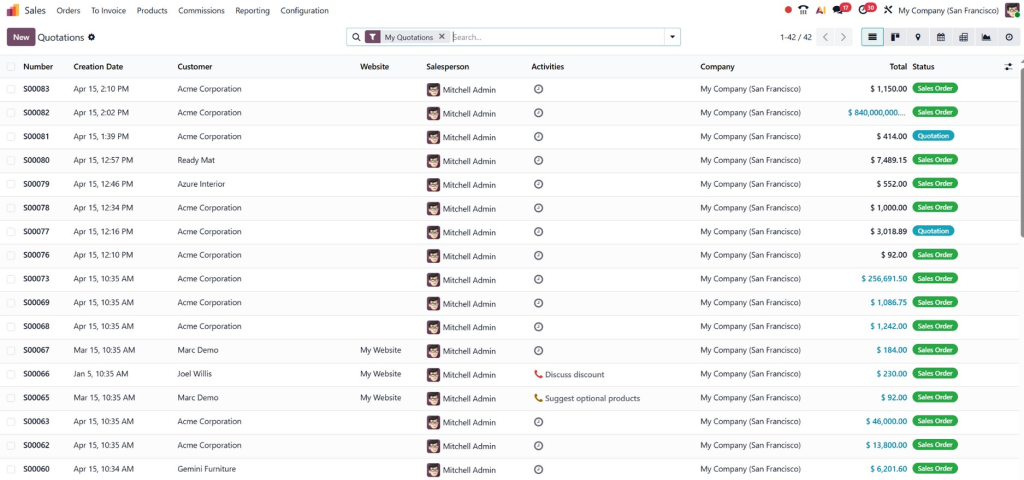
This ease of use eliminates the complexity often associated with ERP systems.
5. Scalability for Growing Businesses
As your business grows, your system should grow with you.
Odoo offers:
- Easy module addition
- Scalable architecture
- Support for multiple users and locations
This is one of the most important Odoo ERP implementation reasons for fast-growing companies.
Odoo ERP Migration Benefits That Drive Business Growth
Improved Efficiency and Automation
One of the major Odoo ERP migration benefits is automation.
Odoo helps automate:
- Invoicing
- Inventory tracking
- HR processes
- Sales workflows
This reduces manual errors and saves time.
Real-Time Data and Insights
With Odoo, businesses gain access to real-time data.
This enables:
- Better decision-making
- Accurate forecasting
- Performance tracking
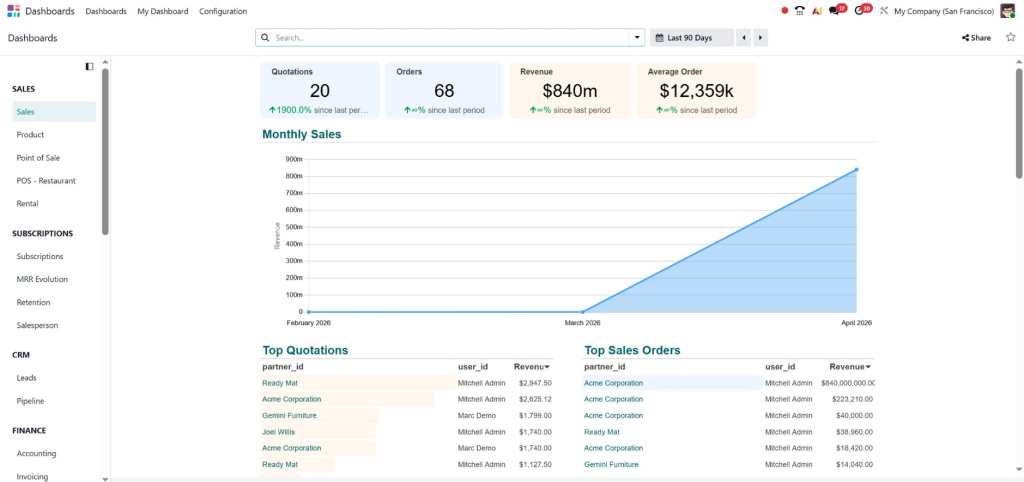
Unlike traditional systems, there is no delay in accessing critical information.
Smooth Integration
Odoo integrates easily with:
- Third-party applications
- Payment gateways
- E-commerce platforms
This eliminates the need for multiple disconnected systems.
Enhanced Customer Experience
With integrated CRM and sales tools, businesses can:
- Track customer interactions
- Improve response time
- Deliver personalized experiences
This is another reason why businesses are choosing Odoo ERP migration.
Odoo ERP vs Traditional ERP – A Clear Winner
Let’s compare Odoo ERP vs traditional ERP to understand why businesses are switching.
Feature | Odoo ERP | Traditional ERP |
Cost | Affordable | Expensive |
Customization | High | Limited |
User Interface | Simple | Complex |
Implementation Time | Faster | Longer |
Integration | Easy | Difficult |
Scalability | Flexible | Rigid |
This comparison clearly shows why companies prefer to switch to Odoo ERP from legacy systems.
Cost of Odoo ERP Migration - What to Expect
The cost of Odoo ERP migration depends on several factors:
- Business size
- Number of modules
- Customization level
- Data migration complexity
However, compared to traditional ERP systems, Odoo offers:
- Lower upfront costs
- Reduced maintenance expenses
- Better ROI
This makes it a smart investment for businesses looking to optimize their operations.
Odoo Migration Success Stories
Many companies across industries have completed Odoo ERP migration and achieved impressive results.
Examples of Success:
- Retail businesses improved inventory accuracy
- Manufacturing companies streamlined production
- Service providers enhanced customer management
These Odoo migration success stories highlight how businesses transformed their operations and achieved growth.
When Should You Switch to Odoo ERP?
If you are experiencing any of the following, it’s time to consider Odoo ERP migration:
- Outdated legacy systems
- Lack of integration between departments
- High operational costs
- Limited scalability
- Poor reporting and insights
These challenges are clear indicators that you should switch to Odoo ERP from legacy systems.
Why Businesses Choose Odoo for Digital Transformation
Digital transformation is no longer optional; it’s necessary.
Here’s why businesses choose Odoo:
- Centralized data management
- Cloud-based accessibility
- Mobile-friendly interface
- Continuous updates and improvements
Odoo acts as a backbone for digital transformation, helping businesses stay competitive.
Odoo ERP Implementation Reasons That Matter
There are several strong Odoo ERP implementation reasons:
- Faster deployment
- Lower risk
- Better adaptability
- Strong community support
These factors make Odoo a reliable and future-ready ERP solution.
Is Odoo ERP Migration the Right Choice for You?
Odoo ERP migration is more than just a trend; it’s a powerful business decision that can transform how your organization operates.
From cost savings and flexibility to improved efficiency and scalability, the benefits are undeniable. The growing number of Odoo migration success stories proves that businesses across the globe are experiencing real results.
If you’re still relying on outdated systems, now is the perfect time to switch to Odoo ERP from legacy systems and unlock new growth opportunities.
Ready to Migrate to Odoo ERP?
At Netilligence, we specialize in seamless Odoo ERP migration, helping businesses transition smoothly with minimal disruption.
👉 Let us help you transform your business with Odoo.
👉 Contact us today for a free consultation and take the first step toward smarter business management.