Why You Should Implement Odoo ERP in 2026 Before Your Competitors Do
If you are running a logistics company, you already know how complicated daily operations have become. One team is handling deliveries, another is managing warehouse stock, drivers are on the road, accounts are preparing invoices, and customers are asking for real-time updates. Everything feels busy all the time.
Now let me ask you something. Do you really have full control over all of this? Or are you depending on different systems, Excel sheets, and manual updates?
This is exactly why you need to implement Odoo ERP in 2026. The companies that decide to implement Odoo ERP in 2026 will move ahead with better visibility, faster decisions, and stronger internal control. Those who delay may continue struggling with errors, delays, and rising operational costs.
If you want your transportation, warehousing, fleet, freight, and supply chain to work together in one connected system, then 2026 is the right time to implement Odoo ERP in 2026 and prepare your business for serious growth.
Odoo ERP for Logistics Companies – One System for Complete Business Control
Let’s talk about reality. In many logistics companies, sales data is separate, warehouse data is separate, and accounting is handled in another software. Because of this, the information does not match, and management does not get a clear picture. Odoo ERP for logistics companies brings everything into one system.
When a sales order is confirmed, the warehouse team gets updated instantly. When goods are dispatched, the invoice is generated automatically. When payment is received, accounts are updated in real time.
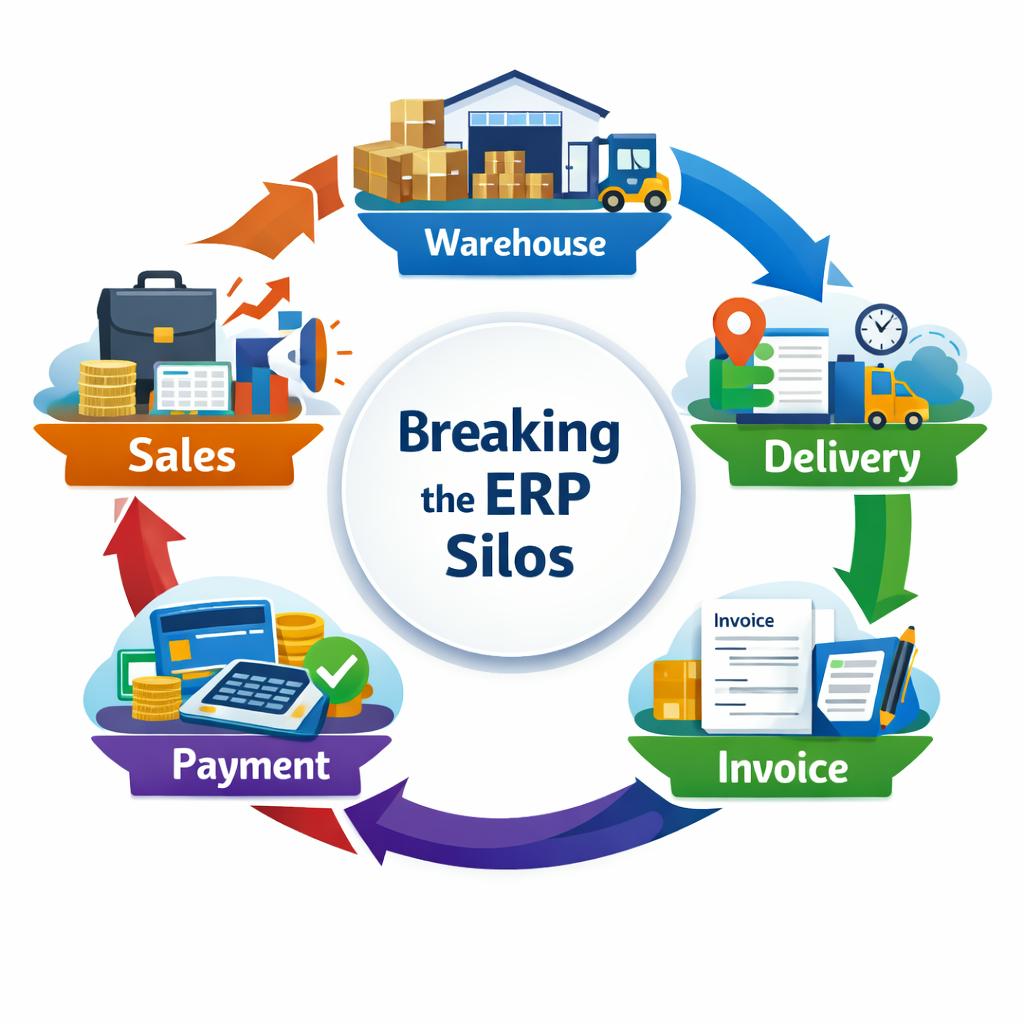
With Odoo ERP for logistics companies, you can track shipments, monitor inventory, manage customers, and review financial reports all from one dashboard. Instead of running after data, data comes to you.
In 2026, customers expect quick updates and transparency. Without a connected system, it becomes very hard to meet these expectations.
Odoo Logistics Management System – Connecting Every Department
A logistics company works smoothly only when every department is aligned. If sales promise something without checking stock, or if warehouse dispatch is delayed without informing accounts, problems start building up. An Odoo logistics management system connects all departments in a structured way.
Orders, deliveries, billing, payments, and reporting are all linked together. This reduces confusion and avoids duplicate work. Everyone works with the same information.
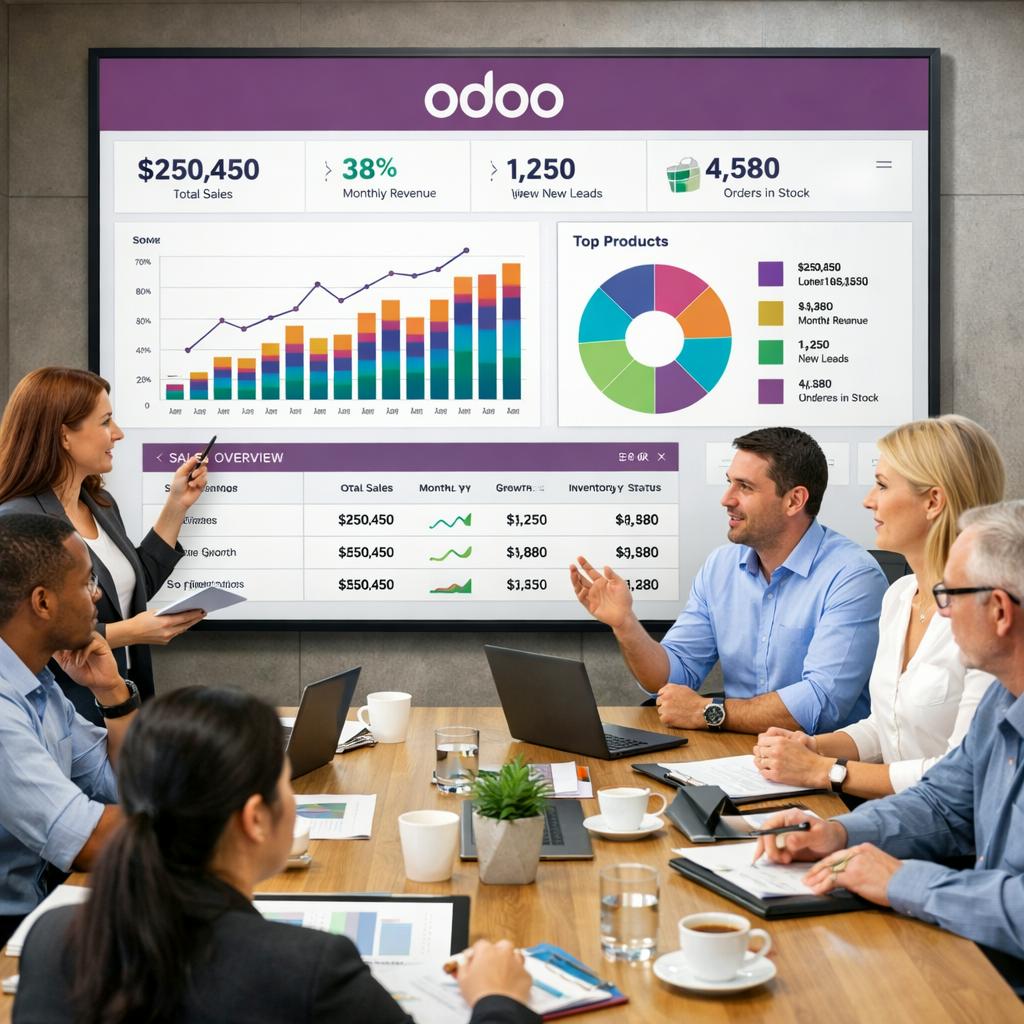
Imagine having full visibility of your operations at any time. You can check which orders are pending, which deliveries are on the way, and which invoices are unpaid without calling five different people. That is the difference a connected system makes.
Odoo ERP for Transportation and Warehousing – Clear Control on the Ground
Transportation and warehousing are the core of your logistics business. If these two areas are not properly managed, profits start decreasing. Odoo ERP for transportation and warehousing gives you real-time operational control.
You can assign vehicles to deliveries, plan routes, monitor driver schedules, and track shipment status. At the same time, warehouse managers can see live stock levels, incoming shipments, and outgoing deliveries.
If stock is running low, the system can trigger alerts. If a delivery is delayed, you can see it immediately. This level of clarity helps you avoid last-minute surprises. Instead of reacting to problems, you can prevent them.
In 2026, businesses that do not use digital tools for transportation and warehousing will find it difficult to compete with companies that operate using live data.
Odoo Supply Chain Management ERP – From Purchase to Final Delivery
Supply chain management is more than just moving goods. It includes purchasing, inventory planning, warehouse handling, transportation, and billing. Odoo supply chain management ERP connects the entire process in one flow.
When you create a purchase order, you can track expected arrival dates. The warehouse team can prepare for receiving goods. Accounting can see the expected cost impact. Management can track performance through reports. Everything becomes visible.
If there is a delay from a vendor, you know immediately. If stock levels are too high or too low, you can take action quickly. With Odoo supply chain management ERP, you do not depend on assumptions. You work with real numbers and real-time information.
In 2026, fast decision-making will be a major advantage. And fast decisions are only possible when your data is organised.
Odoo Inventory and Warehouse Management for 3PL – Managing Multiple Clients Without Stress
If you are running a 3PL business, you already understand how complicated it can be to manage inventory for multiple clients. Each client has different storage terms, billing rules, and reporting requirements. Managing all of this manually increases the risk of errors.
Odoo inventory and warehouse management for 3PL helps you keep everything structured. You can separate stock by client, track storage duration, and generate client-specific reports. Billing can be automated based on storage days, quantity, or other agreed terms.
Instead of calculating charges manually, the system does it for you. Clients also get clear and accurate reports, which build trust. When your reporting is accurate, client relationships become stronger. In 2026, 3PL companies that use organised systems will grow faster than those relying on spreadsheets.
Odoo Freight and Fleet Management Solution – Better Control Over Vehicles and Costs
Fleet expenses can quietly reduce your profit if they are not monitored properly. Fuel costs, maintenance, insurance, and driver performance all need tracking. Odoo freight and fleet management solution gives you complete visibility of your vehicles.
You can monitor fuel logs, track maintenance schedules, assign drivers, and analyse vehicle-related expenses. The system keeps records of insurance renewals and service history. With this data, you can see which vehicles are profitable and which are increasing operational costs.
Instead of guessing, you make decisions based on facts. In a competitive market, even small savings in fleet management can make a big difference in overall profit.
Benefits of Odoo ERP for Logistics Industry in 2026
Let’s talk clearly about the real benefits of Odoo ERP for the logistics industry in 2026.
1. Real-Time Data and Reporting
Managers no longer need to wait for weekly reports. Odoo provides real-time dashboards for:
- Shipment status
- Inventory levels
- Financial performance
- Fleet utilization
- Delivery timelines
- Better data means better decisions.
2. Reduced Operational Costs
Automation reduces:
- Manual errors
- Paperwork
- Duplicate data entry
- Inventory mismatches
Over time, these savings significantly improve profit margins.
3. Improved Customer Satisfaction
Customers want transparency. Odoo enables:
- Real-time tracking
- Faster invoicing
- Accurate delivery updates
- Clear documentation
- Happy customers mean repeat business.
4. Scalability for Growth
As your business grows, Odoo grows with you. You can add:
- More warehouses
- More vehicles
- More users
- International operations
There is no need to switch systems again.
5. Centralized Control
Instead of managing five different systems, everything is centralised. This reduces confusion and increases accountability. These are the practical benefits of Odoo ERP for the logistics industry that directly impact daily work.
Why 2026 Is the Right Time to Implement Odoo ERP in 2026
The logistics industry is becoming more competitive every year. Clients are comparing service quality, speed, and transparency. Companies that rely on outdated systems are already facing pressure. If you choose to implement Odoo ERP in 2026, you prepare your company for the next stage of competition.
- You reduce operational confusion.
- You improve coordination between teams.
- You gain better financial visibility.
- You provide faster and clearer customer service.
Implementing Odoo ERP in 2026 is not just about installing software. It is about building a strong foundation for the coming years. The earlier you take this step, the easier it will be to adapt and grow.
A Smart Move for Logistics Companies in 2026
If you are serious about running a stable and profitable logistics company, then digital systems are no longer optional.
Odoo ERP for logistics companies, Odoo logistics management system, Odoo ERP for transportation and warehousing, Odoo supply chain management ERP, Odoo inventory and warehouse management for 3PL, and Odoo freight and fleet management solution together create a structured environment where every department works with clarity.
The benefits of Odoo ERP for the logistics industry are practical and measurable better control, fewer errors, faster processes, and stronger customer trust.
So, the real question is not whether you need a system. The real question is when you will implement Odoo ERP in 2026 and take your logistics business to the next level. If you are planning growth, 2026 should be the year you make this decision.