
If you are using Odoo and still asking yourself what is a sales journal in Odoo, trust me, you are not alone. I talk to business owners, accountants, and even Odoo users every day who create invoices without really knowing where their sales data is going. They know invoices are generated, and payments come in, but the accounting side can feel confusing behind the scenes.
So let me explain what a sales journal in Odoo is in the simplest way possible. Think of it as a proper record book where Odoo writes down every sale you make. Every customer invoice, every refund, every tax amount goes through this record. This is why understanding what a sales journal in Odoo is not just for accountants, it is for anyone who wants clear reports and fewer mistakes.
In Odoo 19, this journal becomes even more important. If you don’t understand what a sales journal is in Odoo, your reports may look fine on the surface but wrong underneath. And when numbers don’t match, fixing them later becomes stressful.
That is exactly why I wrote this blog. By the time you finish reading, you will not only understand what a sales journal is in Odoo, but you will also know how to use it properly in real business situations.
Odoo 19 Accounting Sales Journal Explained in Simple Words
When we talk about the Odoo 19 accounting sales journal, we are talking about the place where all your sales accounting entries live. Whenever you validate a customer invoice, Odoo automatically creates accounting entries. Those entries do not float around randomly; they are saved inside the sales journal.
The Odoo 19 accounting sales journal tracks three main items. First, how much money did you earn? Second, how much tax you charged. Third, how much your customers owe you. If any one of these is wrong, your reports will not make sense.
Many people think invoices alone are enough, but invoices are only the front side. The Odoo 19 accounting sales journal is the back side that keeps everything balanced. Once you understand this, accounting starts feeling less scary and more logical.
Odoo 19 Sales Journal Importance for Daily Business Accounting
Now, let me explain the Odoo 19 sales journal in a way that connects with daily business life. Suppose checking your profit at the end of the month and feeling confident that it’s correct. That confidence comes from a properly maintained sales journal.
The importance of the Odoo 19 sales journal becomes apparent when generating reports, submitting taxes, or reviewing customer balances. If your sales journal is set up correctly, everything flows smoothly. If it is not, you may see missing amounts, wrong tax values, or confusing totals.
I have seen businesses panic during audits simply because they ignored the importance of the Odoo 19 sales journal in the early stages. Fixing mistakes later always takes more time than doing it right from day one.
Odoo 19 Sales Journal Setup and Why It Should Never Be Rushed
The Odoo 19 sales journal setup is often rushed during implementation. They just click next, save, and move on. But this step determines how your sales will be recorded for years to come.
During Odoo 19 sales journal setup, you define which income account will be used, which taxes apply, and how entries will be posted. If these settings are wrong, every invoice created after that will carry the same mistake.
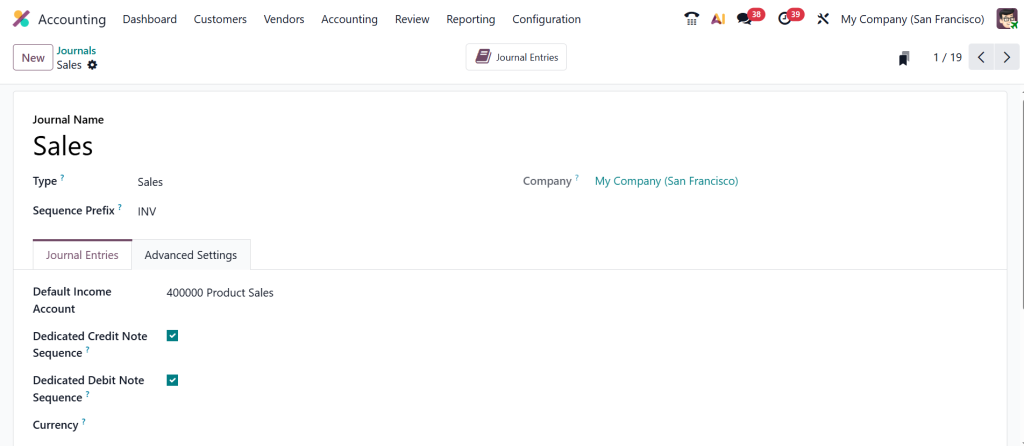
That is why I always suggest reviewing the Odoo 19 sales journal setup carefully before you start invoicing customers. It is not about complexity; it is about clarity. Once set correctly, Odoo takes care of the rest.
Configure Sales Journal Odoo 19 UAE with Local Accounting Needs in Mind
If your business operates in the UAE, you must properly configure the sales journal in Odoo 19 UAE. UAE VAT rules are strict, and even small errors can create issues during tax filing.
When configuring the sales journal in Odoo 19 UAE, ensure VAT accounts are linked correctly, tax percentages are accurate, and invoice postings comply with local compliance rules. Many users skip this part and later struggle with VAT reports that don’t match expectations.
Properly configured, the sales journal in Odoo 19 UAE makes VAT reporting simple and predictable. You always know where your tax data is coming from, and there are no surprises at the end of the quarter.
Sales Journal Odoo Tutorial That Explains What Happens After You Click ‘Confirm’
This sales journal Odoo tutorial is for those who wonder what actually happens when they confirm an invoice. You click confirm, the invoice appears to be done, but in the background, Odoo creates accounting entries instantly.
Here is what happens in simple terms. Customer amount is added to receivables. Sales value is recorded as income. VAT amount is recorded separately. All these entries are saved inside the sales journal.
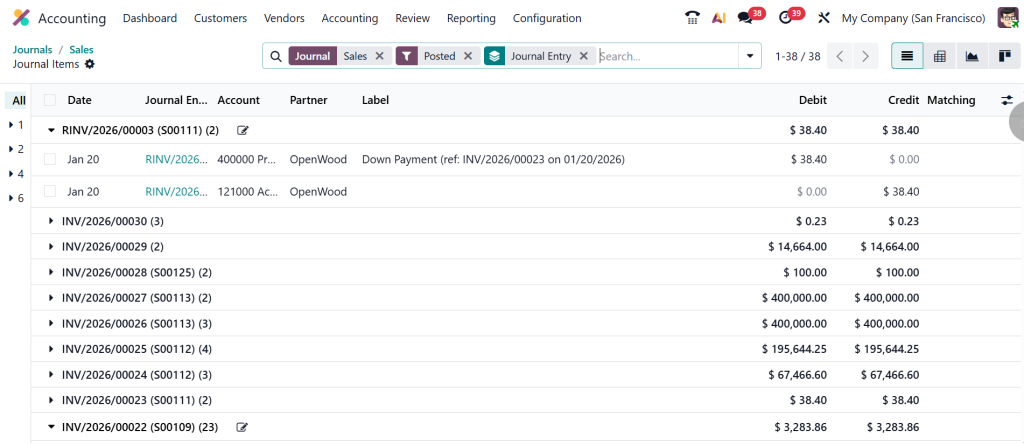
Once you understand this flow, accounting stops feeling like a black box. This sales journal Odoo tutorial helps you trust the system because you know exactly where your numbers are coming from.
Odoo Sales Journal vs Bank Journal and Why Mixing Them Creates Confusion
One of the most common questions I hear is about the Odoo sales journal vs bank journal. People often think both are the same, but they serve very different purposes.
The difference between the Odoo sales journal and bank journal is simple. The sales journal records what you sold. Bank journal records how you received or paid money. The sales journal talks about invoices. The bank journal talks about payments.
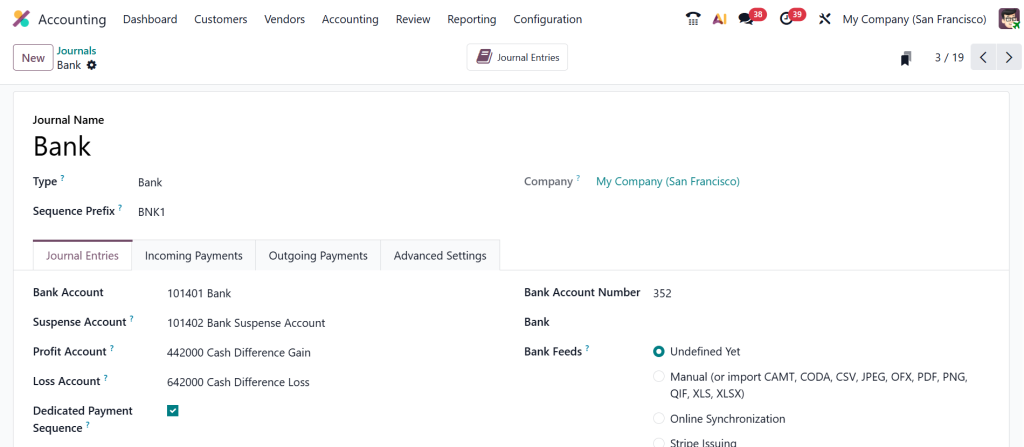
If you mix entries between the Odoo sales journal vs bank journal, your reports become confusing. You may see income recorded twice or payments that don’t match invoices. Keeping these journals separate keeps your accounting clean and understandable.
Why Understanding Sales Journal in Odoo Saves Time Later
Coming back to what a sales journal in Odoo is, the real benefit of understanding it is the peace of mind it provides. When something goes wrong in reports, you know exactly where to look. You don’t panic, you just check the journal.
Understanding the sales journal in Odoo also helps when talking to accountants or consultants. You know the right terms, you understand the logic, and decisions become easier. Instead of guessing, you know why numbers look the way they do.
How Proper Sales Journal Setup Solves Common Odoo Accounting Problems
Many common Odoo accounting problems are actually sales-journal issues. Wrong totals, missing taxes, or incorrect revenue usually point back to sales journal settings.
With the right Odoo 19 sales journal setup, these problems are automatically reduced. You don’t need daily fixes or manual adjustments. Odoo works as expected because the foundation is correct.
That is why understanding the Odoo 19 sales journal is not optional. It directly affects how relaxed or stressed you feel when checking your accounts.
Why Netilligence Focuses on Sales Journal Configuration in Odoo 19
At Netilligence, we have seen that a clear understanding of the sales journal in Odoo changes how businesses use the Platform. Clients who invest time in proper journal configuration face fewer accounting issues and trust their reports more.
We guide businesses through Odoo 19 accounting and sales journal configuration in the UAE, and explain everything in simple terms so nothing feels confusing.
What Is a Sales Journal in Odoo and Why You Should Care Today
So now, if someone asks you what a sales journal in Odoo is, you won’t hesitate. You know it is the core record of your sales, taxes, and customer balances. You know why Odoo 19’s sales journal is important. You understand the difference between the Odoo sales journal vs bank journal. And you know why a correct setup saves you from future stress.
If you are already using Odoo 19 or planning to implement it, take your sales journal seriously. It quietly supports every report you trust and every decision you make.
And if you ever feel stuck or unsure, Netilligence is here to help you set things right from the start, so your accounting supports your business instead of confusing it.